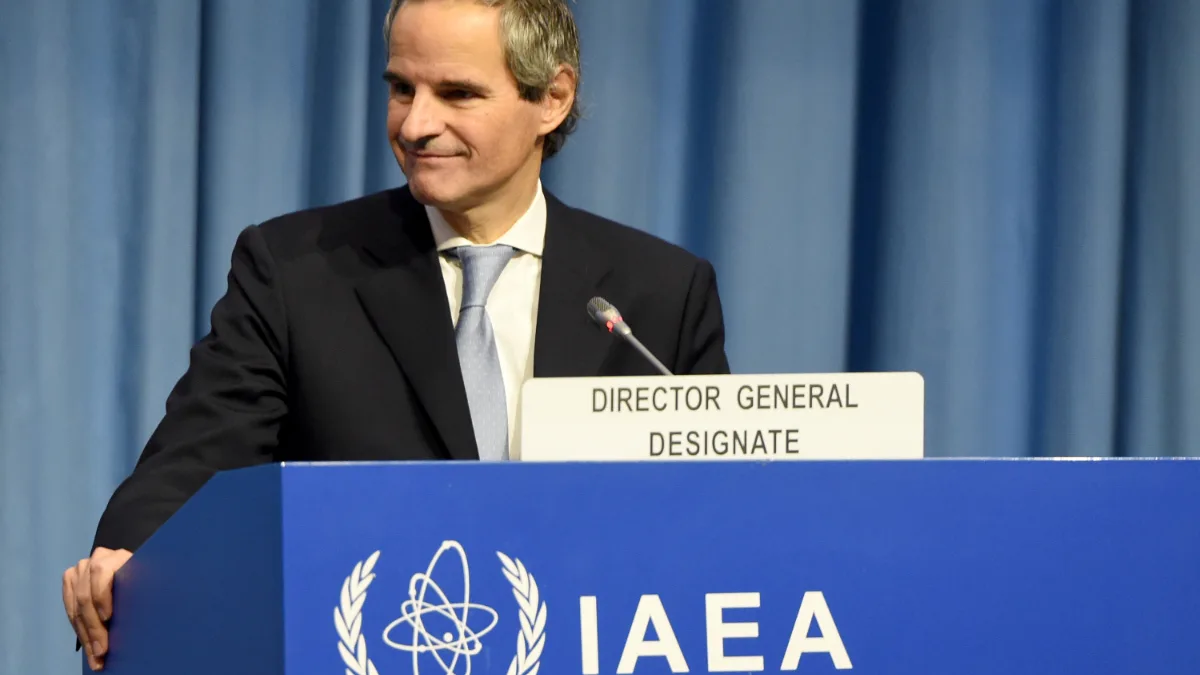
The conflict surrounding Iran’s nuclear infrastructure has significantly altered the trajectory of Tehran’s atomic programme, according to International Atomic Energy Agency (IAEA) chief Rafael Grossi, who said ongoing military action and attacks on nuclear-related facilities have brought several previously active activities to a halt.
The assessment marks a notable shift in how international monitors view Iran’s nuclear capabilities following months of heightened tensions and strikes targeting key sites.
Advertisement
Speaking during a visit to the United Arab Emirates, Rafael Grossi said the situation surrounding Iran’s nuclear programme had changed substantially as a result of the war and attacks directed at nuclear assets.
According to Rafael Grossi, several activities that were previously underway inside Iran have now stopped, leading to a reassessment of the country’s nuclear programme.
He indicated that the disruption caused by the conflict has affected ongoing operations and altered the overall picture being monitored by international inspectors and intelligence agencies.
The IAEA chief’s comments come amid continuing international scrutiny of Iran’s nuclear ambitions and growing concerns over regional stability.
Uranium stockpile remains a concern
Earlier on Tuesday, Rafael Grossi had discussed proposals aimed at addressing concerns surrounding Iran’s stockpile of highly enriched uranium.
He said Iran currently possesses approximately 440 kilograms of uranium enriched to 60 per cent purity, a level that is significantly above civilian requirements and closer to weapons-grade enrichment.
According to Rafael Grossi, one US proposal that has repeatedly surfaced in discussions involves moving the enriched material outside Iran.
While calling the proposal as technically feasible, Rafael Grossi cautioned that transferring the material would involve considerable operational difficulties.
He explained that the uranium is stored in gaseous form, making transportation and handling more complicated because of contamination and safety concerns.
Despite those challenges, he said such a move remains possible if the parties involved decide to pursue it.
Alternative options discussed
Another approach being considered involves reducing the enrichment level of the uranium or diluting the stockpile to make it less sensitive from a proliferation perspective.
Rafael Grossi said these possibilities are being examined by those engaged in negotiations concerning Iran’s nuclear programme.
He clarified that the IAEA is not directly participating in the talks but remains engaged through separate contacts with officials in Tehran and Washington.
Focus on compliance
The IAEA chief said his discussions with both sides are aimed at ensuring that any future arrangement can be effectively monitored and verified.
According to Rafael Grossi, the agency’s priority remains establishing mechanisms that would allow inspectors to confirm compliance should a new understanding on Iran’s nuclear activities emerge.